Strategies for Effective Relationships
| Site: | MSL Learn |
| Course: | Local Government and Libraries |
| Book: | Strategies for Effective Relationships |
| Printed by: | Guest user |
| Date: | Tuesday, October 27, 2026, 4:21 AM |
Common Good AND Sharing the Wealth
Local governments exist to ensure that the common good and basic needs of a community are met through responsible use of public funds. They create and maintain the infrastructure necessary for health, wellbeing, and safety.
Libraries exist to meet the common good and basic needs of individuals within communities for information, culture, quality of life, and personal growth through responsible use of public funds.
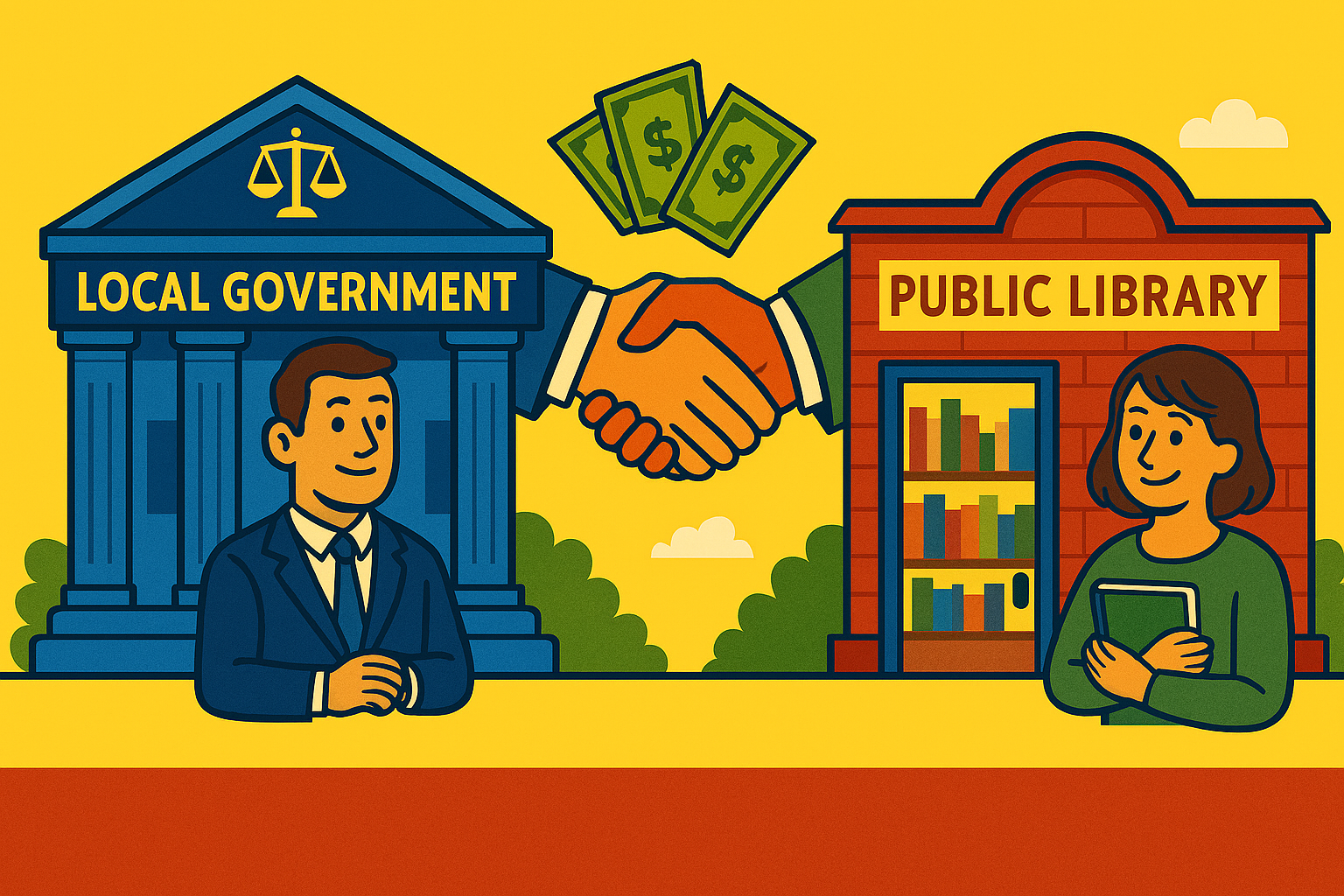
Illustration generated by Copilot.
Balancing Authority and Powers with Local Government
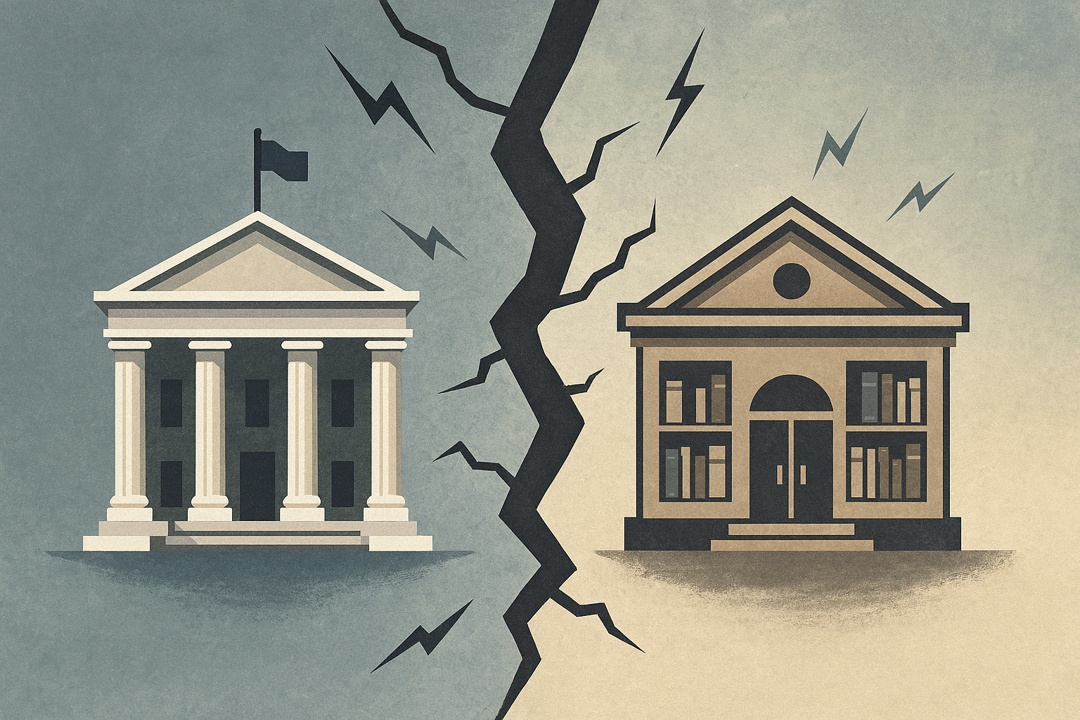 The most common areas of tension or conflict between a local government and a library happen around
- money (library budget)
- personnel
- facilities
- board authority.
Some of this tension is inherent in the structure of the law.
Montana Code gives most library boards a fair amount of authority and city councils and county commissions aren’t used to this power structure. They are used to advisory boards that focus on policy and services and leave budgets and personnel management to the city or county.
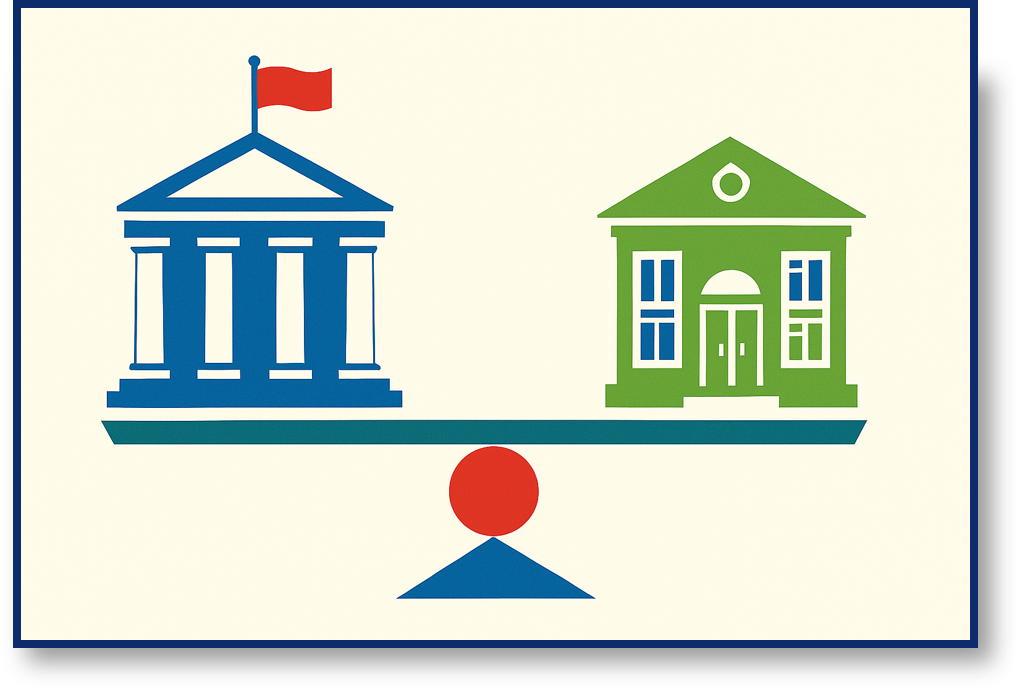 This tension exists because of a need for checks and balances within government.
Checks and balances support
- the recognition of the importance of spreading power over a wide range of individuals
- the importance of not giving the most powerful local government body full control over what appears on a library’s shelves or in its programming
Checks and Balances
To keep things in perspective, attending to these potential areas of tension will help your library serve the information, economic, workforce, and cultural needs of the community. With balance and healthy relationships, it is exciting to think about the possible opportunities you will bring to your patrons.
Watch this short video for some inspiration.
Build and Manage Relationships
What are some ways you can manage potential tension and build positive relationships with local government officials?
This list details different areas of focus for building relationships. Take note of any actions you are already doing, need to do soon, or need to plan.
Time and Effort
Building relationships takes time and effort. Good relationships require an understanding of structures, authority, roles of the various officials, and a willingness to recognize the challenges that have to be balanced in order to provide the best library services your community expects and can support.
Connecting with Local Government Officials Before a Problem Begins
This excerpt from the MSL Connecting with Local Government Officials handbook is worth considering.
If your library only interacts with local government officials minimally and only at budget time your relationship is an example of what typically happens in libraries. This is a great time to develop stronger relationships. It is much easier to begin this process when things are neutral or positive.
If things aren’t so great or if the library is suffering from a lack of financial or administrative support from local government officials, you might want to do something different. Hopefully, you want to have a better relationship than what you have right now.
When interacting with local government officials it is human and normal to want to start with our concerns and worries. All of us are busy. It’s natural to want quick talking points that convince our local government officials to fund the library or to support a big project at the library. This guide isn’t about that.
It’s about changing your mindset and approach in such a way that you see the humanity in your local government officials, and you work with them to provide better service to the community. It’s about long-term relationships that might not seem to have any immediate benefit until suddenly in a crisis or hard time the connections help both the library and the local government weather the storm.
Some Suggestions for Library Boards
- Track meeting dates and times for local government entities and plan regular attendance.
- Create standing agenda items to report out or check in on areas of concern.
- Keep up-to-date contact information available to make it easy to reach out with a quick phone call.
- Consider assigning individual trustees to monitor issues that may impact library budgets and operations.
Who Can Help?
There may be situations that are truly difficult to resolve when there are disagreements or misunderstanding about authority, budgets, facilities, or personnel management.
Breakdowns in communication and relationships happen for a variety of reasons--and these are stressful for everyone concerned. So, what do you do when it seems that compromise or respectful communication are not possible?
Reach out to the professionals who have the skills and knowledge to help bring everyone to the table.
Getting Started
As we start to wrap up the course you may want to make a plan to get started with applying the information you have learned.
Take a few minutes to write your notes for each of these items:
- Form of Your Local Government
- Name and Contact Information for Relevant Local Government Officials
- Meeting Schedules and Agendas for Councils, Commissions, or Boards
- Identify Strategic Goals for
- Funding
- Personnel
- Facilities
- Board Authority
- Review Relevant Agreements
- Make a list of questions and the best person to provide answers.